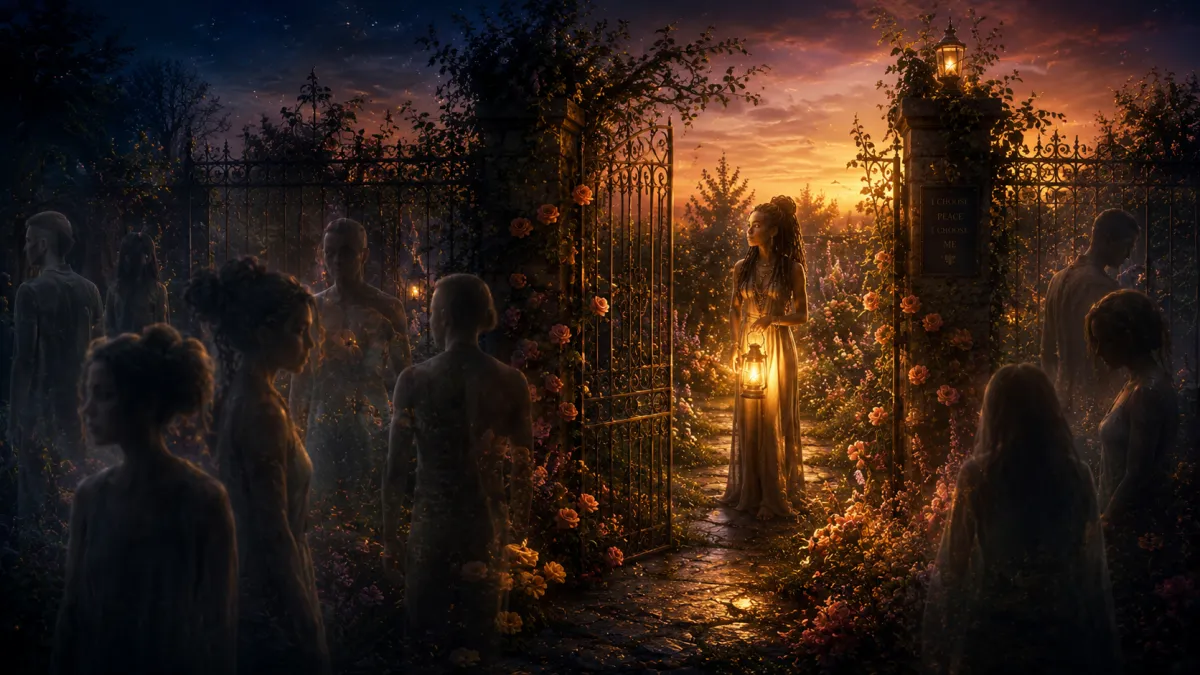
Journal Entry: Mourning Potential
Mourning Potential
May 18, 2026
Nobody really prepares you for this kind of grief.
The grief that comes after death has rituals.
Funerals.
Flowers.
Cards.
Meals.
Sympathy.
Community.
People know what to say.
Or at least they try.
But there is another kind of grief.
A quieter kind.
A stranger kind.
A grief with no funeral.
No obituary.
No clear ending.
The grief of watching someone you love slowly disappear while they're still alive.
The grief of accepting that the version of someone you keep hoping for may never arrive.
The grief of realizing that love cannot heal a person who is committed to remaining wounded.
I didn't understand this kind of grief until recently.
I thought grief belonged to cemeteries.
Now I know it also lives in text messages.
Phone calls.
Family gatherings.
Courtrooms.
Hospitals.
Memories.
Blocked numbers.
And unanswered prayers.
For most of my life, I believed that if I loved someone enough, eventually they would feel it and they would soften.
Eventually they would choose healing.
Eventually they would want peace.
I truly believed that.
Not because I was naïve.
Because I was hopeful.
There is a difference.
Hope can be beautiful.
But hope can also become a cage.
Especially when it keeps us standing in doorways that closed years ago.
I think about that often.
The doorways.
How many years I spent standing in front of certain relationships waiting for them to become something they were never willing to become.
Waiting for accountability.
Waiting for honesty.
Waiting for mutual effort.
Waiting for healing.
Waiting for repair.
Waiting.
Waiting.
Waiting.
Sometimes I wonder how much of my life was spent in waiting rooms that had no doctor coming.
The realization arrived slowly.
Not all at once.
Like fog lifting.
Like dawn breaking.
Like finally putting on glasses after years of squinting.
I began noticing patterns.
The same conversations.
The same chaos.
The same emotional storms.
The same refusal to take responsibility.
The same cycle wearing different costumes.
At first, I thought awareness would make me angry.
It did.
But not in the way I expected.
I wasn't angry at them.
Not really.
I was angry at myself.
Angry for how long I kept negotiating with reality.
Angry for how many times I mistook potential for progress.
Angry for how many chances I gave people who kept showing me the same version of themselves.
There is a unique heartbreak in realizing someone has shown you exactly who they are.
Repeatedly.
And you're the only one still waiting for the transformation.
I remember sitting alone one evening.
The house was quiet.
The kind of quiet that only happens after children finally fall asleep.
The soft hum of electronics filled the room.
A lamp glowed amber in the corner.
Outside, the darkness pressed gently against the windows.
I sat curled beneath a blanket thinking about all the people I've loved.
Not romantically.
Humanly.
Family.
Friends.
People whose stories became intertwined with mine.
And I asked myself a question that felt almost dangerous:
"What if accepting people isn't the same thing as staying available to them?"
The question stopped me cold.
Because somewhere deep inside, I had linked acceptance with access.
If I accepted someone, I thought I had to remain available.
Remain reachable.
Remain responsible.
Remain engaged.
No matter how much damage the relationship caused.
But acceptance and access are not the same thing.
Acceptance says:
"I see who you are."
Access says:
"You may continue influencing my life."
One does not require the other.
That realization changed everything.
Because suddenly boundaries stopped feeling cruel.
They started feeling honest.
I wasn't rejecting anyone.
I was accepting reality.
Reality says some people are not ready.
Reality says some people choose chaos.
Reality says some people will spend their entire lives protecting wounds they refuse to heal.
Reality says I cannot save them.
Not because I don't love them enough.
Because healing cannot be outsourced.
And perhaps that's the most painful truth of all.
Every person eventually stands before their own mirror.
Their own wounds.
Their own choices.
Their own responsibility.
No one can do that work for them.
Not a sister.
Not a daughter.
Not a spouse.
Not a friend.
No one.
The strange thing is, once I stopped trying to save everyone, I discovered how much energy I had been losing.
The constant worrying.
The constant anticipating.
The constant emotional monitoring.
The constant wondering if today would finally be the day things changed.
I didn't realize how exhausting hope had become.
Not hopeful faith.
Desperate hope.
The kind of hope that keeps you emotionally chained to someone else's potential.
The kind that prevents you from fully living your own life.
So I let go.
Not of love.
Of expectation.
There is a difference.
I still love them.
I may always love them.
But love no longer requires proximity.
Love no longer requires self-sacrifice.
Love no longer requires me to participate in my own suffering.
These days, I think of boundaries differently.
They're not walls.
They're gardens.
A wall keeps everyone out.
A garden requires stewardship.
Discernment.
Protection.
Care.
Some people are invited in.
Some people are not.
Not because they are bad.
Because they are not safe.
And safety matters.
Especially when you've spent years convincing yourself it doesn't.
I used to believe distance meant failure.
Now I understand something different.
Sometimes distance is what love looks like when wisdom finally arrives.
Sometimes the most compassionate thing you can do is stop interfering with someone else's lessons.
Sometimes the most loving thing you can do is walk away from the fire.
Not because you stopped caring.
Because you've finally learned that setting yourself on fire never saved anyone else.
And perhaps that is the grief.
Not losing the person.
Losing the fantasy.
The fantasy that one day they would become who you needed them to be.
The fantasy that love alone could change everything.
The fantasy that your sacrifice would eventually be enough.
It wasn't.
And strangely...
Accepting that has brought me more peace than all the years I spent hoping otherwise.
Because now I understand.
Grief isn't always about letting go of people.
Sometimes it's about letting go of the stories we wrote about them.
And making peace with the truth instead.